Podcastek
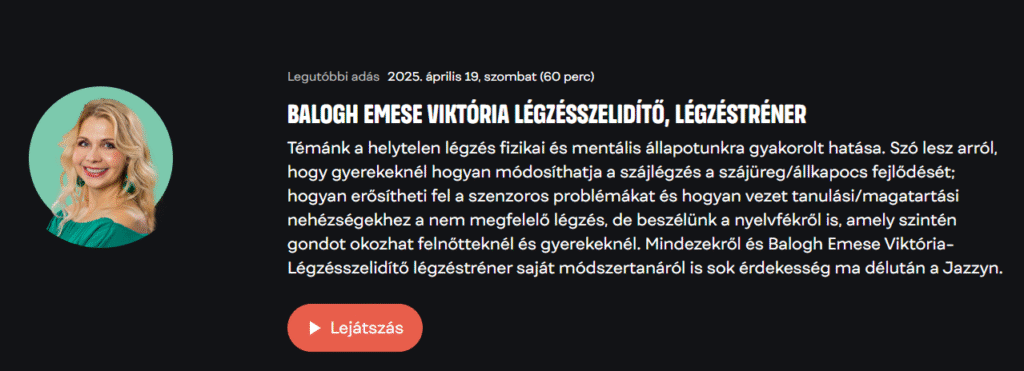
I had the opportunity to speak about breathing as a guest on the Dr. Jazzy program on Jazzy Radio.
We also had a live discussion about children’s breathing on Jazzy Radio’s Business Class program.
On Csillagpont Radio, we had an approximately 20-minute conversation about Buteyko breathing.
At the beginning of April, I was invited back to Csillagpont Radio for a second discussion on Buteyko breathing, where we also covered children’s breathing.
Together with speech therapist Dorka Gólics, we recorded a joint discussion about mouth breathing in children for the Logodorka Podcast.
Dorka also runs mentorship programs for speech therapists, where she invited me as a guest speaker to talk about the connections between breathing training and speech therapy, and to present the complexity of mouth breathing from a breathing coach’s perspective.
Videos
I was a guest on the Félkész Podcast, where we discussed the connections between breathing and sleep.
I appeared as an expert on the Spiritusz program on Vác’s ESTV, where we explored different aspects of breathing.
Together with speech therapist Virág Sárosdi (Skillo Club), we discussed mouth breathing in children.
Together with dentist Dr. Nóra Vincze, I discussed the connections between mouth breathing and myofunctional orthodontics on Radio Bézs—you can read excerpts from the conversation on my blog.
I had a discussion about breathing with psychologist Milán Leindler on the “csak ha érdekel” podcast.
I also spoke with Jácinta Badacsonyi, a psychologist and researcher specializing in sensory integration issues, about the relationship between sensory integration disorders and dysfunctional breathing.
I had a live conversation with Alexa Szakonyi, which you can watch on my YouTube channel.
I also had a live discussion with Gréti Hepp, which you can watch on my YouTube channel.
Articles
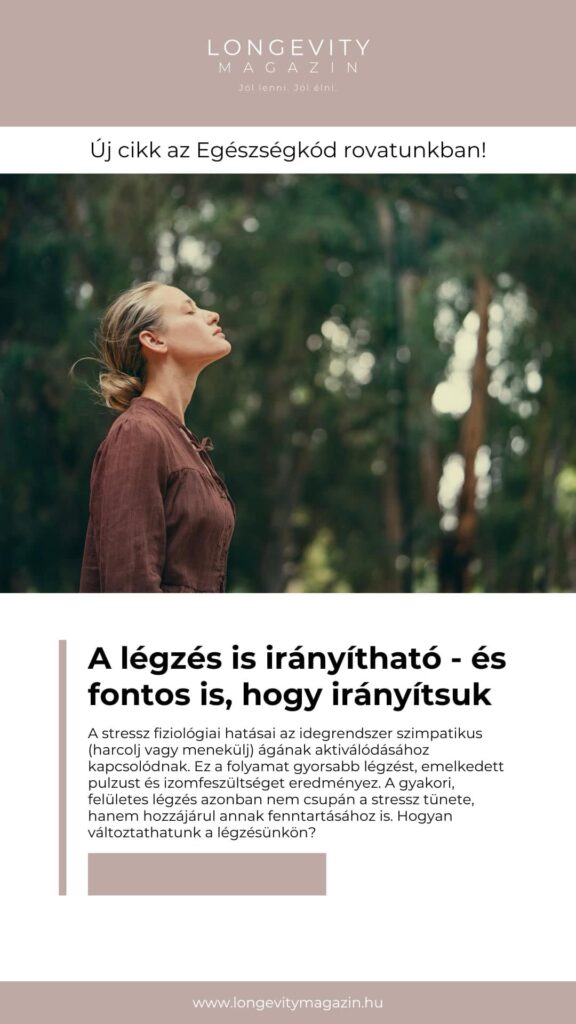
I contributed as an expert to an article in Longevity Magazine:
The physiological effects of stress are linked to the activation of the sympathetic (fight-or-flight) branch of the nervous system. This process results in faster breathing, an elevated heart rate, and muscle tension. However, frequent, shallow breathing is not only a symptom of stress but also contributes to maintaining it. How can we change the way we breathe?
Proper breathing can help activate the parasympathetic (rest-and-digest) branch of the nervous system, which lowers heart rate, supports digestion, and allows for regeneration. Research has also shown that slow, deep nasal breathing effectively reduces levels of the stress hormone cortisol and improves oxygenation of the blood.
For some time now, I have personally been paying more attention to how I breathe correctly, and the educational materials of Emese Viktória Balogh – Légzésszelidítő and Buteyko Clinic breathing coach have been a great help in this. Through her teachings, one can learn that one of the foundations of balance is slow, deep nasal breathing. According to her, nasal breathing is especially important in winter, as the nose not only warms, humidifies, and filters the air, but also enables deeper and more efficient breathing through the use of the diaphragm.
I was featured as an expert in Coloré, a women’s magazine:
“‘I first encountered the Buteyko method as someone dependent on nasal spray. Breathing is an automatic process we shouldn’t even have to think about, as it happens on its own. However, the conditions of our modern world work against proper breathing and can easily disrupt it. This can lead to dysfunctional breathing patterns, which may affect sleep, blood pressure, nervous system function, and hormonal balance, ‘- explained Viki. “Stress, a sedentary lifestyle, and excess weight are among the factors that most negatively influence our breathing.”
Előadások
I delivered a 1.5-hour lecture on breathing at the Gyüttment Festival (2024).
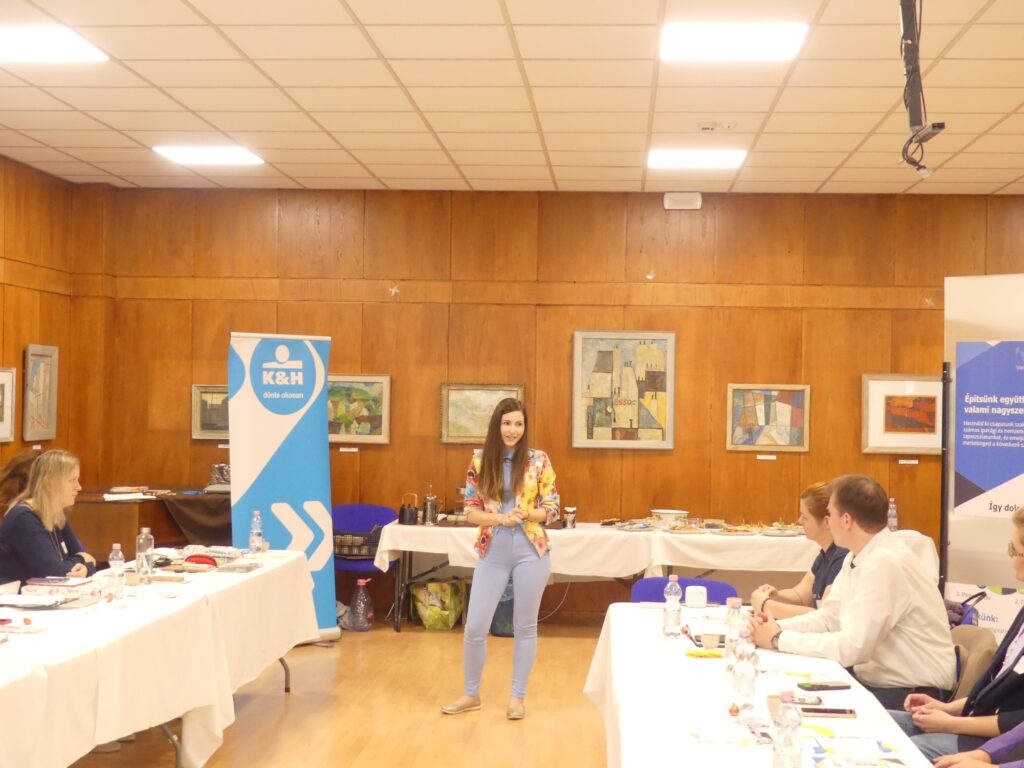
I also gave a short introduction to breathing for the business community of Vác and its surrounding area—of course, they didn’t leave without practical breathing exercises.
Media appearances
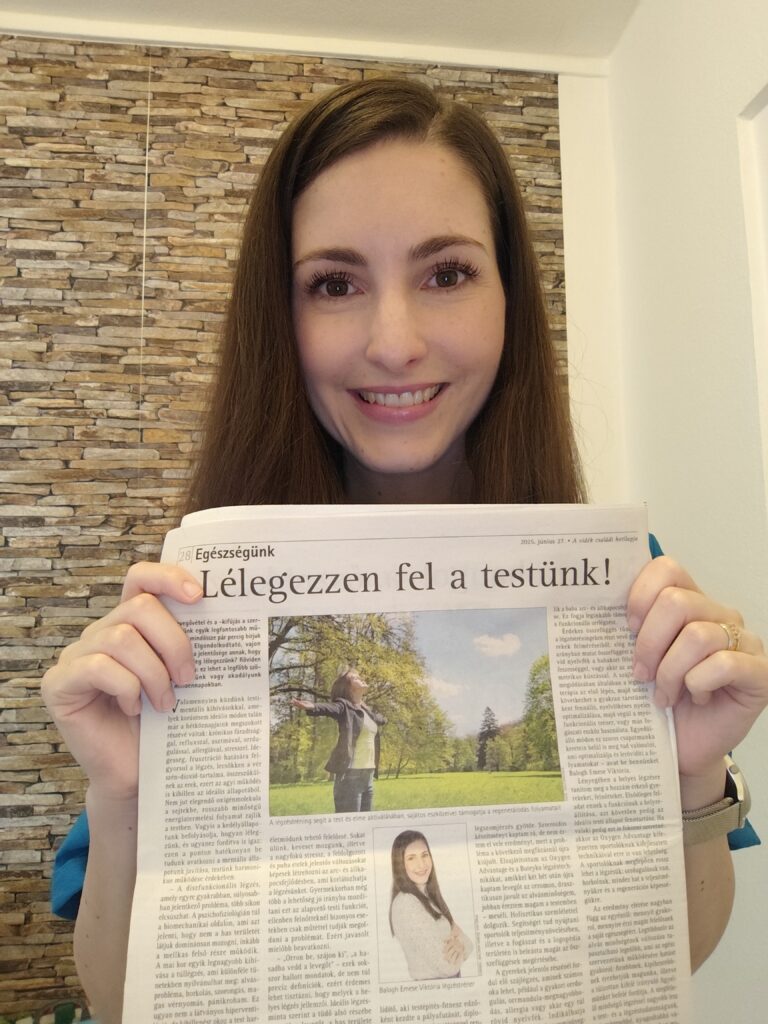
I gave an interview to the weekly newspaper Szabad Föld about the complexity of breathing. The paper has a readership of approximately 40,000.
You can watch our conversation here.